
The People of Bijagua
A Village Worth Knowing
Small in size, extraordinary in spirit. Meet the community that calls this microclimate home.
Life Between the Volcanoes
Bijagua is not a destination that announces itself. There are no grand plazas or tourist strips — just a main road, a church, a football pitch, and the kind of unhurried daily life that most of the world has traded away.
What makes it remarkable is the people. Farmers who know every trail on Miravalles. Guides who grew up swimming in Río Celeste. Families who have watched the cloud forest change with the seasons for three generations. Their knowledge of this place is irreplaceable — and they are generous with it.

The Farmers
Generations of families have worked the fertile volcanic soil of the Bijagua valley, growing pineapple, yuca, and plantain in the shadow of Miravalles.

The Artisans
Local craftspeople carry forward traditions of weaving, woodwork, and pottery — many influenced by the Maleku heritage that runs deep in this region.

The Young
A new generation is growing up with one foot in the cloud forest and one eye on the world — proud of where they come from and curious about where they are going.
“We have always known this place was special. We are glad the world is starting to agree.”
— A voice from Bijagua
The Land's Gift
Cacao Country
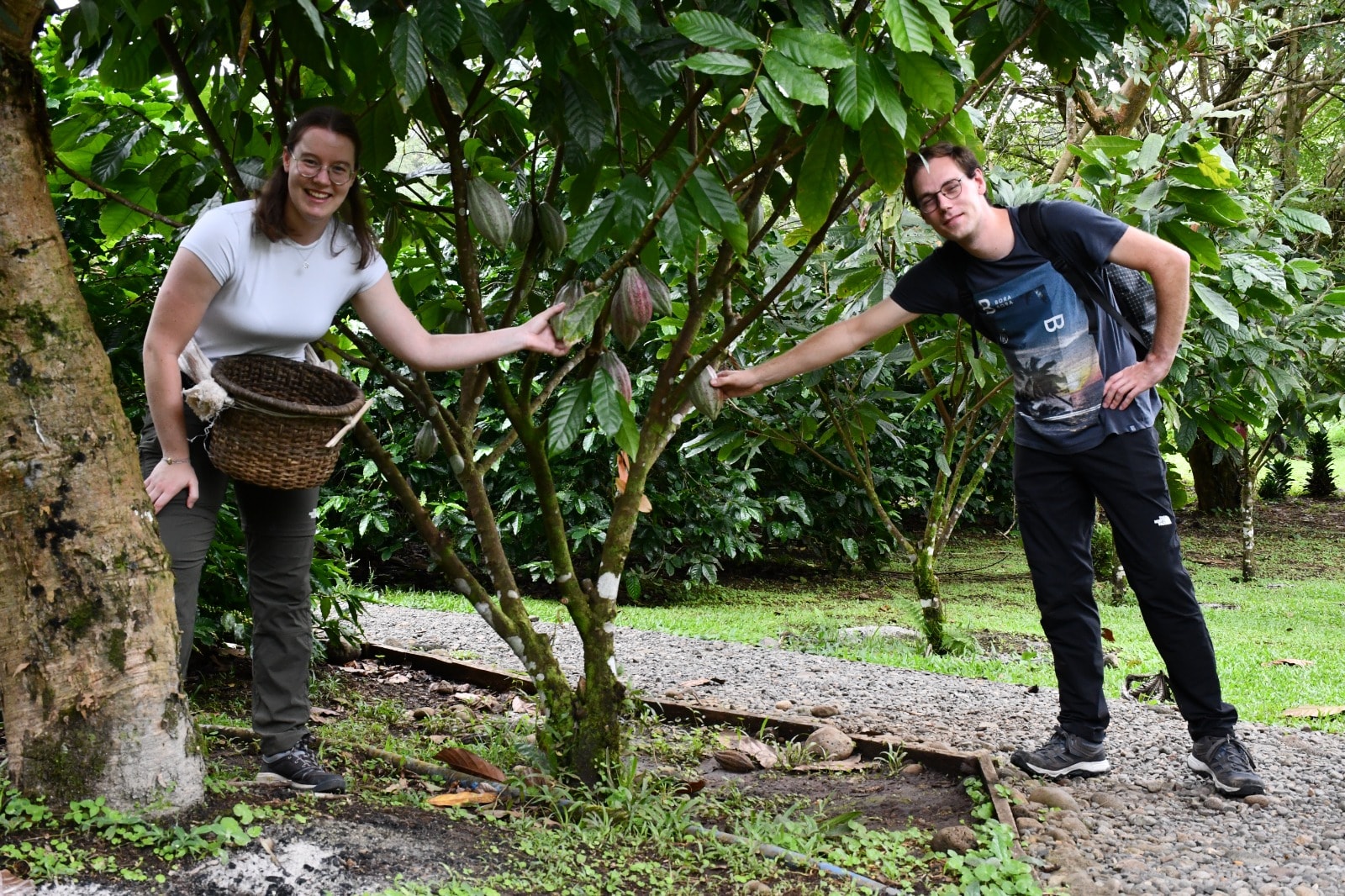
The volcanic soils and humid microclimate of the Bijagua valley create some of the finest cacao-growing conditions on earth. Nestled between Miravalles and Tenorio, this region produces cacao beans of exceptional quality — rich, complex, and deeply aromatic.
Several large plantations operate in the area, many family-owned and rooted in generations of agricultural knowledge. The cacao grown here finds its way into premium chocolate makers who prize the distinct flavor profile that only this microclimate can produce.
Visitors can explore the journey from pod to bar — walking the plantation rows, cracking open a fresh cacao pod, tasting the sweet white pulp, and understanding the fermentation and drying process that unlocks the chocolate within.

Come and meet us
The best way to understand Bijagua is to spend time with the people who live here. Our local guides and hosts are ready to welcome you.